Communication and Sensing
From Compressed Sampling to Model-based Deep Learning
TUESDAY, JULY 18TH, 2023
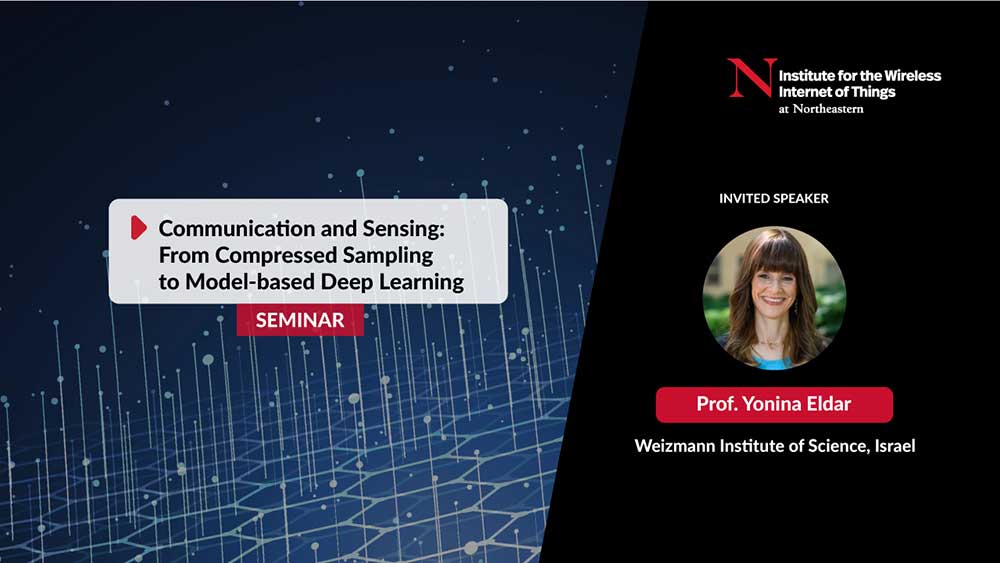
During this seminar, Yonina Eldar, Professor in the Department of Mathematics and Computer Science, Weizmann Institute of Science, Rehovot, Israel, addressed the challenges posed by increasing signal bandwidths and limitations in current acquisition capabilities.
About the Seminar
The famous Shannon-Nyquist theorem has become a landmark in analog-to-digital conversion and the development of digital signal processing algorithms. However, in many modern applications, the signal bandwidths have increased tremendously, while the acquisition capabilities have not scaled sufficiently fast.
Furthermore, the resulting high-rate digital data requires storage, communication, and processing at very high rates, which is computationally expensive and requires large amounts of power.
In this talk, we consider a general framework for communication and sensing, including sub-Nyquist sampling, quantization, and processing in space, time, and frequency which allows to dramatically reduce the number of antennas, sampling rates, number of bits, and band occupancy in a variety of applications.
Our framework relies on exploiting signal structure, quantization, and the processing task in both standard processing and deep learning networks leading to a new framework for model-based deep learning. We consider applications of these ideas to a variety of problems in wireless communications, imaging, automotive radar, microscopy, and ultrasound imaging and show several demos of real-time prototypes, including a wireless ultrasound probe, sub-Nyquist automotive radar, cognitive radio and radar, dual radar-communication systems, super-resolution ultrasound and microscopy, and a deep Viterbi decoder.
We end by discussing more generally how models can be used in deep learning methods with various applications.
About the Speaker
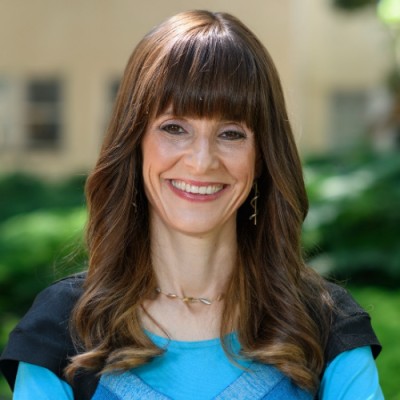
Yonina Eldar is a Professor in the Department of Mathematics and Computer Science, Weizmann Institute of Science, Rehovot, Israel, where she heads the Center for Biomedical Engineering and Signal Processing and holds the Dorothy and Patrick Gorman Professorial Chair. She is also a Visiting Professor at MIT, a Visiting Scientist at the Broad Institute, an Adjunct Professor at Duke University, and a Visiting Professor at Stanford.
She is a member of the Israel Academy of Sciences and Humanities, an IEEE Fellow, and a EURASIP Fellow. She received a B.Sc. degree in physics and a B.Sc. degree in electrical engineering from Tel-Aviv University and a Ph.D. degree in electrical engineering and computer science from MIT in 2002.
Professor Yonina has received many awards for excellence in research and teaching, including the IEEE Signal Processing Society Technical Achievement Award (2013), the IEEE/AESS Fred Nathanson Memorial Radar Award (2014), and the IEEE Kiyo Tomiyasu Award (2016). She was a Horev Fellow of the Leaders in Science and Technology program at the Technion and an Alon Fellow. She received the Michael Bruno Memorial Award from the Rothschild Foundation, the Weizmann Prize for Exact Sciences, the Wolf Foundation Krill Prize for Excellence in Scientific Research, the Henry Taub Prize for Excellence in Research (twice), the Hershel Rich Innovation Award (three times), and the Award for Women with Distinguished Contributions.
She has also received several best paper awards and best demo awards together with her research students and colleagues, was selected as one of the 50 most influential women in Israel, and was a member of the Israel Committee for Higher Education. She is the Editor in Chief of Foundations and Trends in Signal Processing and a member of several IEEE Technical Committees and Award Committees. She heads the Committee for Promoting Gender Fairness in Higher Education Institutions in Israel.